

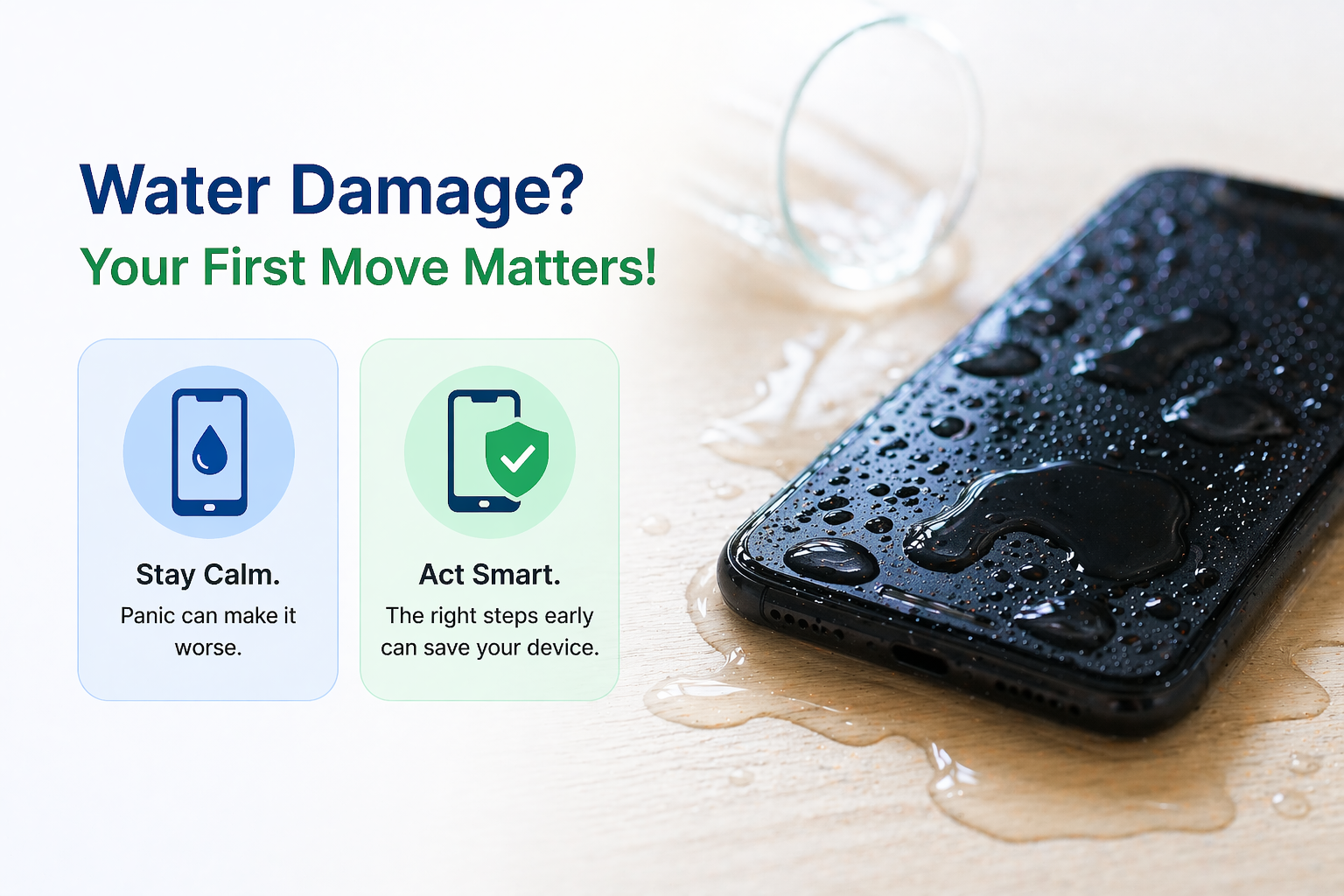
Dealing with water damage can feel stressful, especially when your device suddenly gets exposed to liquid. Whether it’s a spill, rain, or an accidental drop in water, your first reaction can make a big difference.
Many people panic or take the wrong steps, which can actually worsen the situation. The truth is, handling liquid damage in phone situations correctly—right from the start—can improve your chances of saving the device.
How Do You Know If Water Damage Is Serious?
Not all damage is visible right away. In some cases, your device may continue working normally for a while before problems begin to show.
Here are some signs that indicate serious issues:
- The device won’t turn on
- Screen flickering or touch not responding
- Charging problems or battery instability
- Overheating without heavy usage
If you notice these symptoms, it often means the internal components have been affected. At this stage, dealing with water damage quickly becomes more important to prevent further deterioration.
Does Water Damage Happen Immediately?
One of the biggest misconceptions is that the damage happens instantly. While some effects can appear right away, many problems develop gradually.
Right after exposure, your device might seem completely fine. But over time, you may notice:
- Slower performance
- Battery draining faster than usual
- Random glitches or restarts
This delay happens because moisture continues to spread internally, affecting circuits and connections. That’s why even if everything seems normal, dealing with water damage early is always the safer approach.
Common Mistakes to Avoid After Water Exposure
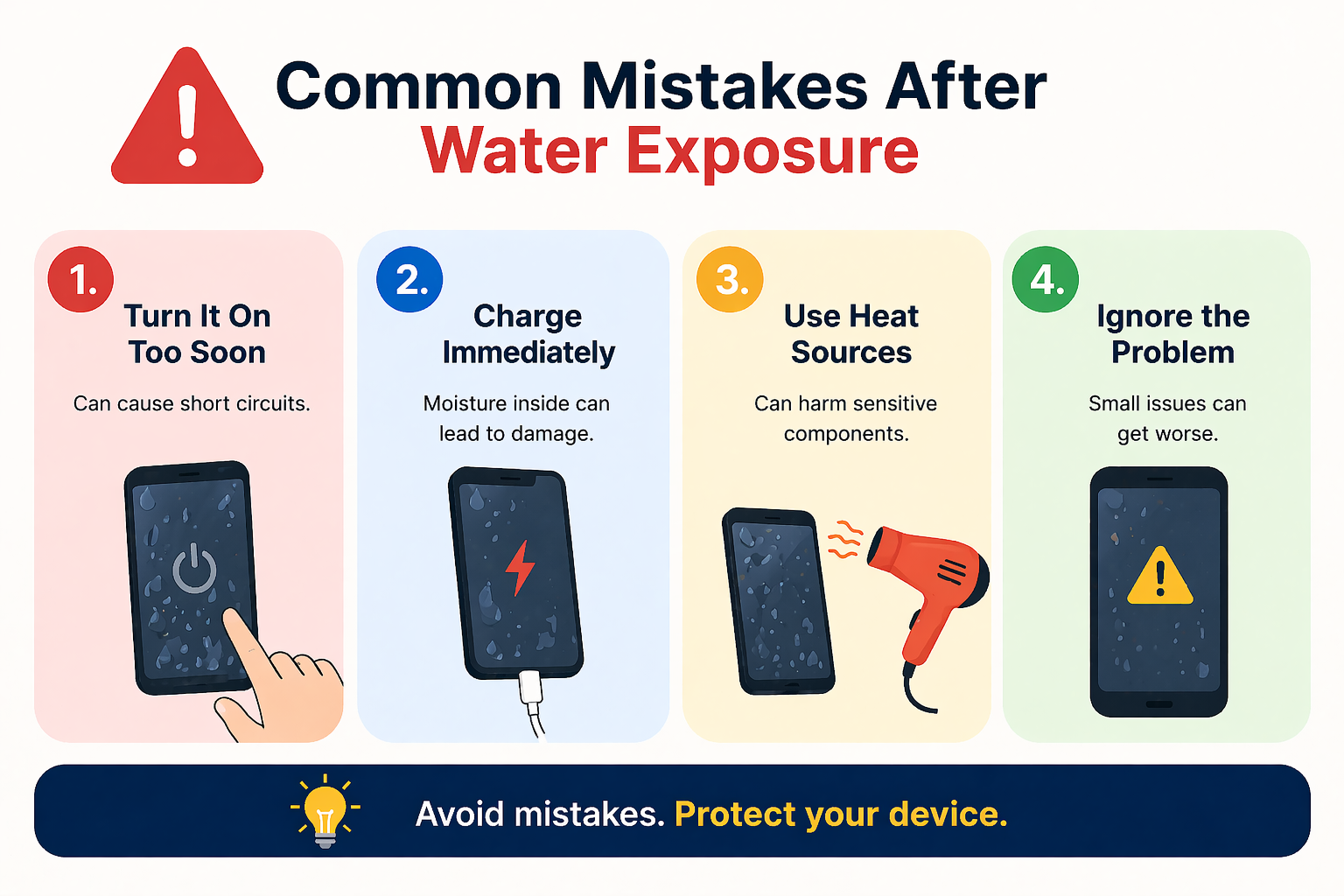
When a device gets wet, people often take steps that unintentionally make things worse.
Here are some common mistakes:
1. Turning the Device On Too Soon
Trying to check if it still works can cause short circuits.
2. Charging Immediately
Plugging it in while moisture is still inside increases the risk of internal damage.
3. Using Heat Sources
Hairdryers or direct sunlight can damage sensitive components instead of helping.
4. Ignoring the Problem
Assuming the device is fine can lead to bigger issues later.
Avoiding these mistakes is just as important as knowing what to do next.
What Dries Up Water Quickly?
Drying your device properly is key, but it should be done carefully.
Safer methods include:
- Letting the device air dry in a well-ventilated space
- Using silica gel packets to absorb moisture
- Keeping the device in an upright position to allow water to drain
Avoid rushing the process. Quick fixes may seem helpful, but patience is essential when handling liquid damage in phone situations.
When Should You Try to Fix It?
If your device continues to show issues after drying, it may be time to take further steps.
You should consider trying to fix water damaged phone problems when:
- The device doesn’t power on
- Display or touch isn’t working properly
- Charging becomes inconsistent
- Performance drops significantly
At this point, internal cleaning or professional attention may be required to prevent long-term damage.
In many cases, people rely on experienced technicians who regularly deal with these issues across different platforms and real-world scenarios.
Why Acting Quickly Makes a Difference
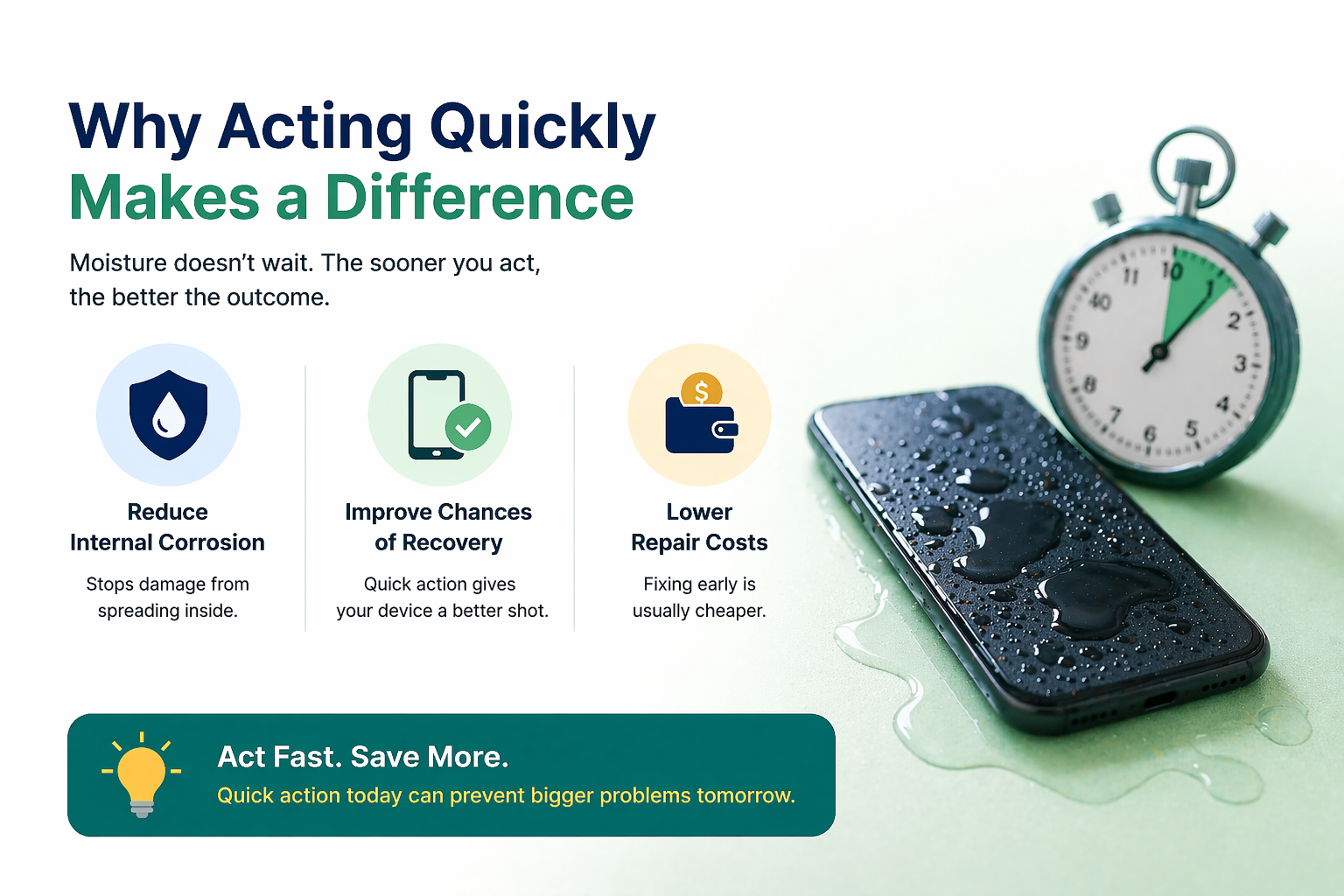
Time plays a major role in recovery. The longer moisture stays inside, the more damage it can cause.
Taking early action can:
- Reduce internal corrosion
- Improve chances of recovery
- Lower repair costs
That’s why dealing with water damage promptly is always the smartest move.
Final Thoughts: Stay Calm and Act Smart
Dealing with water damage doesn’t always mean your device is beyond repair. What matters most is how you respond in those first crucial moments.
Avoid panic-driven decisions, follow safe drying methods, and stay patient. Even when your device has been exposed to moisture, the right approach can make a big difference.
If needed, taking action early can help restore functionality and extend your device’s life. Sometimes, a careful and timely response is all it takes to prevent a small issue from becoming a costly problem.
FAQs
1. How do I know if water damage is serious?
Look for issues like screen problems, overheating, or the device not turning on.
2. Does water damage happen immediately?
Not always—it can develop over time as moisture spreads internally.
3. What dries water quickly?
Air drying and silica gel are safer options.
4. Can I fix a water damaged phone at home?
Basic drying can help, but serious issues may need professional repair.
5. What is the biggest mistake after water exposure?
Turning on or charging the device too soon.